Dinosaurs / Other sauropods
Tazoudasaurus
Dinosaur Early Jurassic
Tazoudasaurus was a sauropod that lived in the Early Jurassic, 193 to 175 million years ago.
- Mass
- 10.3 tonnes
- Lived
- 193 to 175 million years ago
- Fossil finds
- 2
The size of Tazoudasaurus
Its body mass is estimated at 10.3 tonnes (11.4 short tons), about as heavy as a city bus.
Mass: Benson and others, body mass data, CC0, read 2026-11-15.
Name
Name and family
The genus was named by Allain et al. in 2004.
Its one listed species is Tazoudasaurus naimi.
It is classed as a herbivore, a diet the database records for Sauropoda as a whole.
It is one of 133 other sauropods in the Paleobiology Database.
Family tree
- Dinosauria
- Saurischia
- Sauropodomorpha
- Massopoda
- Sauropodiformes
- Sauropoda
- Gravisauria
- Tazoudasaurus
Fossils
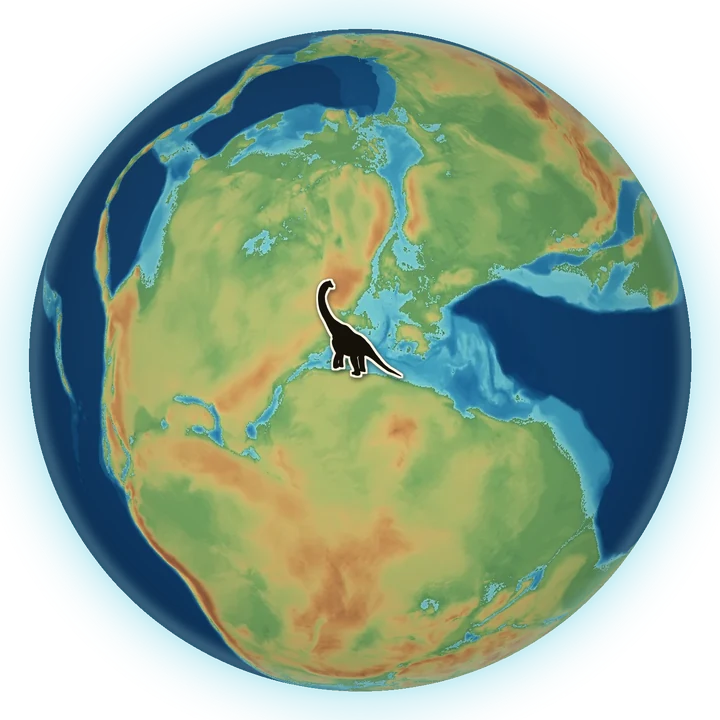
Where Tazoudasaurus has been found
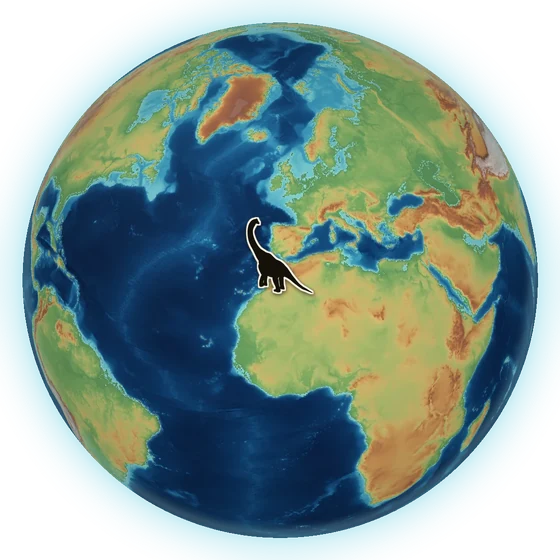
Two fossil finds of Tazoudasaurus are recorded, in Morocco.
On the atlas's maps its finds appear at 185 million years ago.
Neighbours
Its world
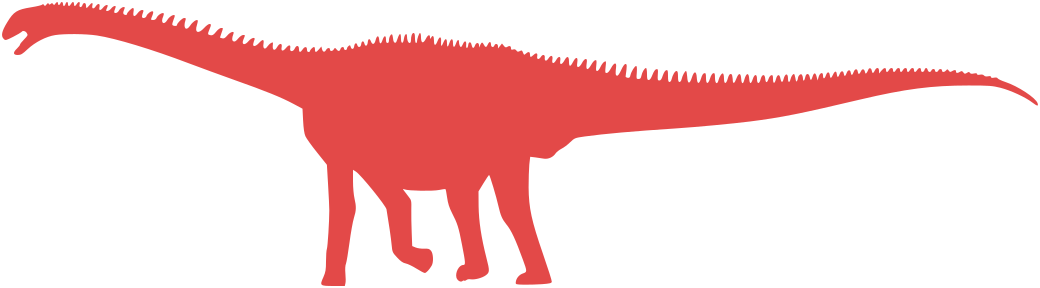
Its closest relatives in this atlas are Amygdalodon, Barapasaurus and Cetiosaurus.
Closest relatives
 Cetiosaurus
Sources
Fossil records were read from the Paleobiology Database on 2026-11-16. Tazoudasaurus in the Paleobiology Database (CC0).
Ancient map: Scotese and Wright 2018, PALEOMAP PaleoDEMs, doi:10.5281/zenodo.5460860, CC BY 4.0, redrawn as shaded relief.
Outline: Brachiosaurus altithorax by Amy Beauvois, PhyloPic, CC0.
The size drawing uses the outline of Brachiosaurus altithorax, standing in as a general sauropod shape; no openly licensed outline of Tazoudasaurus in a pose that can be measured was found.